Chasing details before work can start
Gather missing information, flag incomplete requests, and prepare a useful summary before someone schedules or quotes.

Dilyas Studio / Independent AI & workflow consulting
I help small service businesses simplify the work between inboxes, forms, and spreadsheets. Together, we pick one recurring bottleneck and build a practical improvement around how your business runs.
Work directly with Biswajit Sandilya, founder and independent consultant.
The best starting point is a task your team repeats often enough to recognize the cost.
Gather missing information, flag incomplete requests, and prepare a useful summary before someone schedules or quotes.
Explore ways to move approved details between your existing tools, after checking what those tools actually support.
Make outstanding estimates, internal tasks, and customer follow-ups easier to see, assign, and act on.
Illustrative example / fictional request, not a client result
A small service firm receives a request that is missing key details. Here is the kind of workflow we could design together.
Someone still needs to clarify the address, room sizes, condition, and timing.
What we would test: accuracy of the summary, time spent preparing the reply, and how often a person needs to correct it. Pricing and scheduling stay with your team.
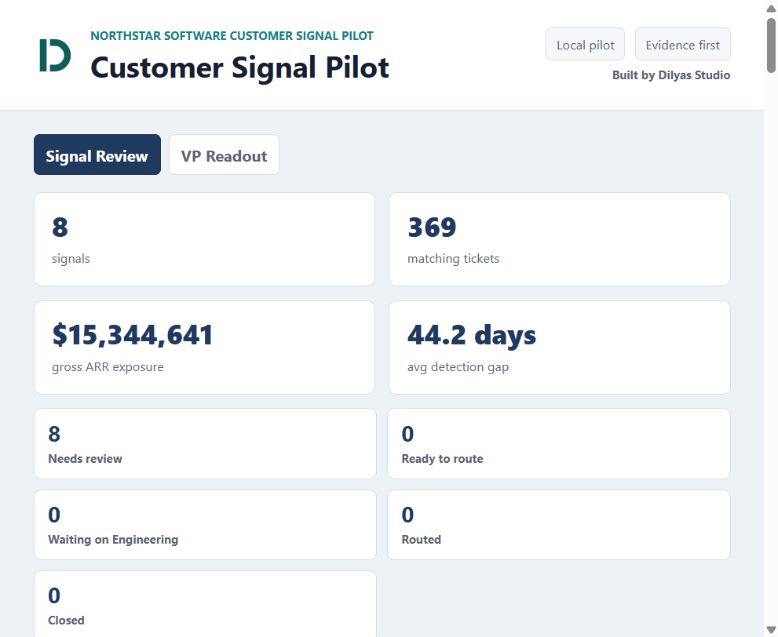
Proof of work / fictional customer-signal pilot
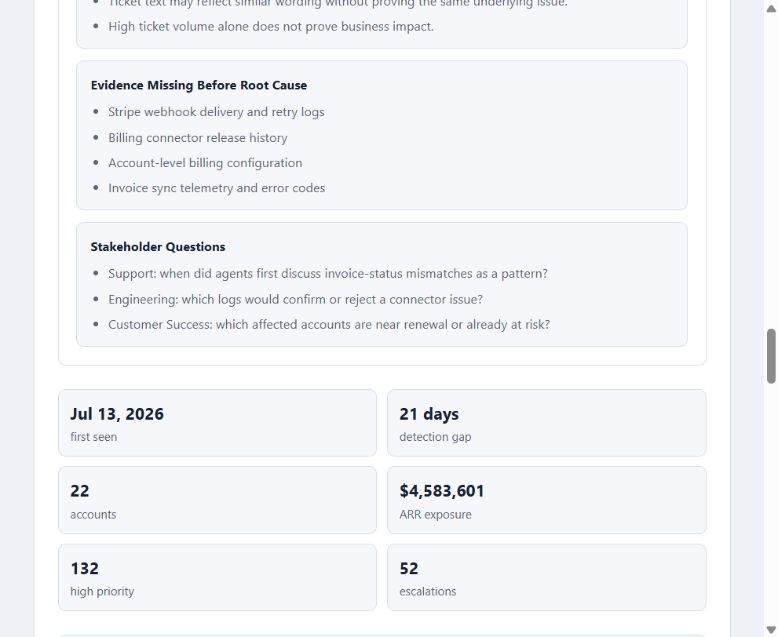
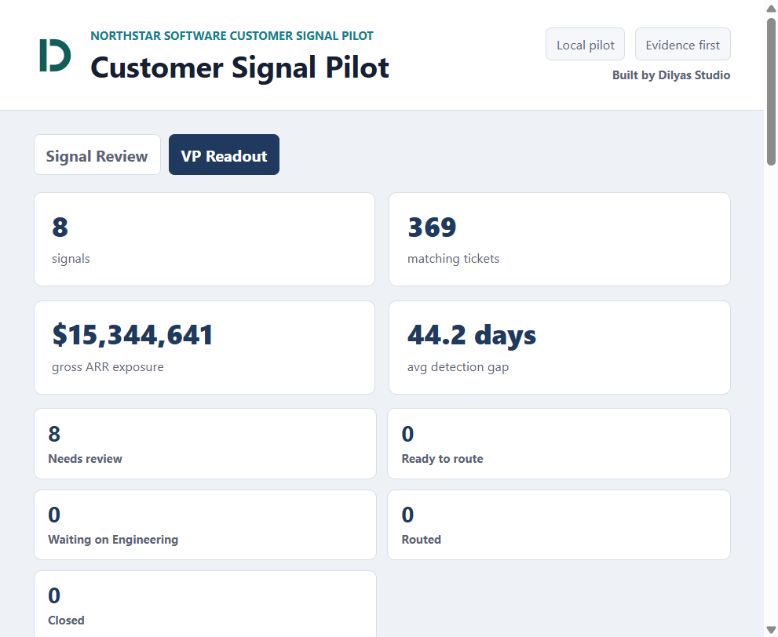
This internal-tool demo shows how Dilyas Studio works through an ambiguous operating problem: define the pain, analyze the data, separate symptoms from root cause, and package the evidence so a leadership team can decide what to do next.
The dashboard reads support tickets, account data, and Jira timing to surface recurring customer patterns, quantify business impact, and route validated signals through a human review workflow.
The work demonstrates an evidence-first consulting approach: customer pain is visible before the solution is obvious, and the right next step is often better workflow, ownership, and decision support.
You bring a recurring task and the tools you use today. I help work out whether a small change, a straightforward automation, or AI is a sensible fit.
Scope, fees, timing, software costs, and ongoing support are agreed before implementation.
Talk through what happens today, where time goes, and what a better result would look like. Decide whether a closer review makes sense.
Map the steps, check tool access, identify exceptions, and propose one improvement with a clear way to assess it.
Test representative examples with you, review mistakes, and document how the workflow is used and paused. Decide what happens next from the results.

Biswajit Sandilya
Founder, Dilyas Studio
I run Dilyas Studio as an independent AI consultancy. You work directly with me to understand the problem, make implementation decisions, and review what is built.
For a first project, I propose a limited scope and an agreed test. That gives us something concrete to evaluate before considering a broader rollout.
A good fit: a small service business with a recurring administrative task, access to its current tools, and someone available to test the change with me.
No. Rules, templates, or a simpler process may be enough. AI is useful where interpreting or drafting information helps, with its output checked against the task.
That needs checking. Available integrations, permissions, and subscription levels affect what is possible. The review identifies these constraints before a build is proposed.
We agree which actions need review. For the example above, the reply stays a draft until a person approves it. Exceptions and a way to pause the workflow are part of the design.
We compare the work against the agreed criteria and decide whether to refine, continue, or stop. Ownership, documentation, and any maintenance arrangement belong in the project scope.
Tell me what repeats, which tools are involved, and where it gets stuck. That is enough to start a useful conversation.
Book a 20 or 30 minute conversation, or send the details by email.